Current Suspected Overdose Deaths in Delaware for 2024: Get Help Now!
Find school water testing results and additional resources
Attention Medicaid Participants: Eligibility Renewals Restarted April 1, 2023


Healthcare-Associated Infections (HAIs)
Overview
What is an HAI?
Healthcare-Associated Infections (HAIs) are infections that you get while you are in a healthcare facility, such as a hospital, rehab, or a nursing home. For example, let’s say you recently had surgery. If the place where you had surgery becomes red, puffy, and painful, you likely have an infection there. If the infection came from the hospital itself and was not present before you had surgery, it is an HAI.
Why do I care?
HAIs can be painful and sometimes deadly. They are also common; around one in 31 patients get an HAI while in the hospital each day.1 In 2015, there were nearly 700,000 cases of HAIs in hospitals, and 72,000 of those patients with HAIs died.2
What is DPH doing?
The Division of Public Health (DPH) works to reduce the number of HAIs. We do this by encouraging prevention methods, such as handwashing and only using antibiotics when necessary. Additionally, all HAIs are reported to DPH, and we keep track of these infections and respond to prevent more infections when necessary.
We also work with other organizations throughout the country, including the Centers for Disease Control and Prevention, the Centers for Medicare and Medicaid Services, and the Quality Insights of Delaware, in order to report on and better understand HAIs.
Information for the public:
What kinds of HAIs are there, and how are they treated?
There are many kinds of HAIs. HAIs are caused by different kinds of germs, including bacteria, viruses, and fungi. How doctors treat HAIs depends on what kind of infection it is. Bacterial infections, for example, are often treated with antibiotics. Below are some of the most common types of HAIs in Delaware.
|
Type of HAI: |
How do you get it? |
|
CLABSI: Central line-associated bloodstream infection |
A central line is a tube that is connected to a patient’s vein. It is used to draw blood or give liquids through. Sometimes germs can get into a patient’s blood through the central line, especially if people do not wash their hands before touching it, causing an infection.3 |
|
CAUTI: catheter-associated urinary tract infection |
A catheter is a tube that can be inserted into the bladder. Germs can get into the bladder, and other parts of the urinary tract such as the kidneys, and cause an infection. As with CLABSI, this often occurs when people do not properly wash their hands before touching it.4 |
|
VAE: Ventilator-associated events |
Ventilators are life-saving machines that help patients to breathe. However, they can also lead to health problems in the patient, including infections like pneumonia.5 |
|
SSI: surgical site infections |
After surgery, the place where the surgery occurred might become infected. These are called surgical site infections.6 |
|
C. difficile |
C. difficile is a bacteria also known as C. diff or Clostridioides difficile. It can cause severe diarrhea and can be fatal.7 Importantly, hand sanitizer does not kill C. difficile, so always use soap and water to wash your hands if you have diarrhea. |
|
C. auris |
Candida auris is a fungus that can cause infections in the blood and in wounds. It is difficult to treat, because it is often resistant to multiple antifungal dugs.8 |
|
MRSA bacteremia |
MRSA is a type of infection, known as methicillin-resistant Staphylococcus aureus, that is resistant to some antibiotics. When this infection gets into your blood, it is called MRSA bacteremia. It can get into your blood through tubes such as central lines and catheters, and during and after surgery.9 |
What are drug-resistant infections, also known as antibiotic-resistant infections or multidrug-resistant organisms (MDROs)?
Often infections from bacteria are treated with antibiotics, which kill the bacteria and help to clear the infection. Unfortunately, some bacteria can develop resistance to these antibiotic treatments. This means that the bacteria are no longer killed by the antibiotic, making the infection that much harder to treat, and that much more deadly to the patient. There are different kinds of antibiotics, so some bacteria that are resistant to one kind of antibiotic can be killed by another. However, bacteria can become resistant to multiple kinds of antibiotics.
Where can I get an HAI?
You can get an HAI in any kind of health care facility. This includes hospitals, rehab centers, dialysis centers, same-day surgery centers, and long-term care facilities (nursing homes, assisted living centers, and skilled nursing facilities).
How can I protect myself from HAIs?
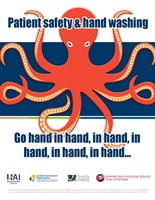
Washing your hands regularly, with soap and water for at least 15 seconds, removes germs on your hands and stops you from spreading germs to anyone else. You can also use hand sanitizer that is at least 60% alcohol, though this does not protect you from C. diff. While in the hospital, you should clean your hands after touching the bed rails, table, remote controls, and doorknobs. These are places that are commonly touched by other people, and so are most likely to have germs on them. You should also wash your hands before and after touching your mouth, eyes, and nose, before and after eating, and before and after using the bathroom.10
You can also ask your doctors and nurses to wash their hands before they touch you, especially if they are touching your wounds or the tubes that are attached to you.
As mentioned, antibiotic-resistant infections are much harder to treat. To prevent antibiotic-resistant infections, only take antibiotics when needed. Antibiotics do not work on viral infections, such as influenza, so if you have a viral infection, do not ask your doctor for antibiotics. You do not need antibiotics for most coughs, runny noses, flu, or colds. Take the antibiotics just as your doctor told you to, for as long as they told you to, even if you start to feel better.11
For more information, please visit the CDC’s website on HAIs: Healthcare-Associated Infections (HAIs) | HAI | CDC
Information for healthcare professionals:
Delaware’s Policies Relating to HAIs:
View the Center for Medicare and Medicaid Services (CMS)’s reporting requirements of HAIs for healthcare facilities:
Toolkits for healthcare facilities:

Project Firstline is a Center of Disease and Control (CDC) funded initiative to provide infection prevention and control (IPC) education resources to frontline healthcare workers in a variety of settings, DPH has taken on the initiative to partner with your facilities to train you. CLICK HERE FOR MORE INFORMATION

Current issues
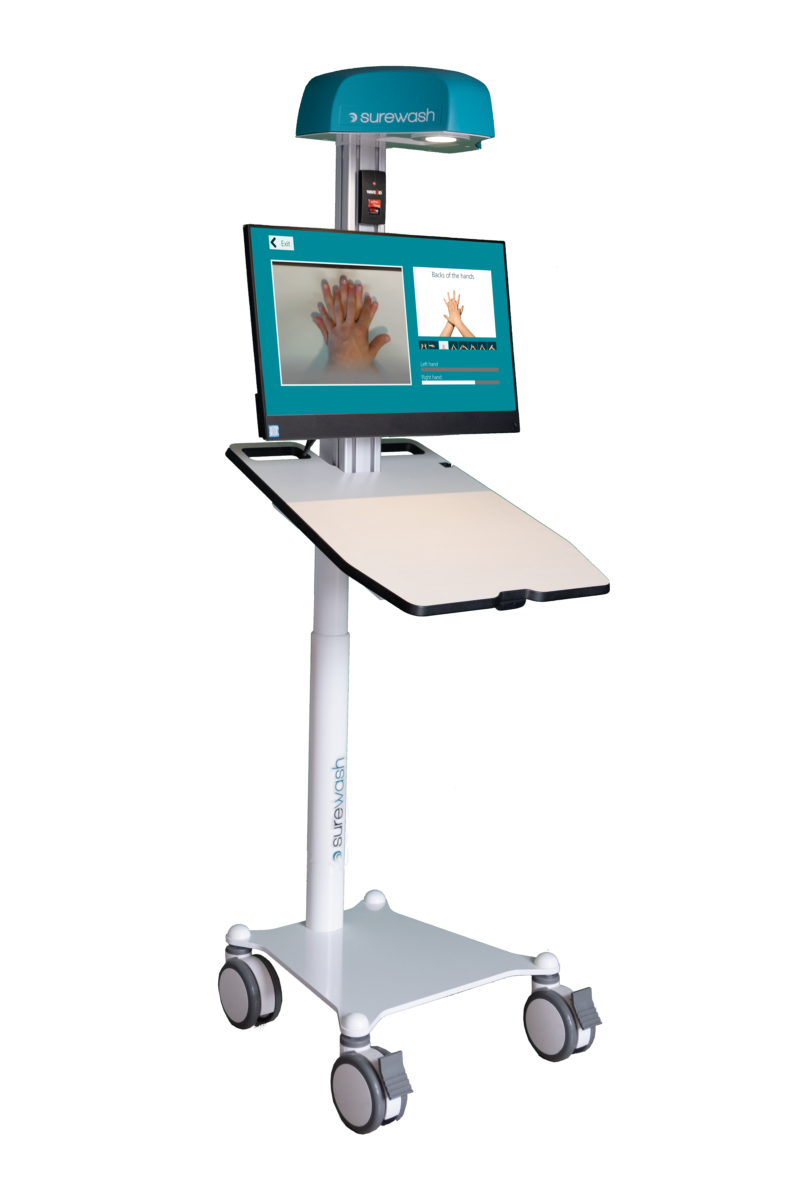
Learn from the only validated training system that can teach and assess hand hygiene technique and deliver Infection Prevention and Control (IPC) education!
SureWash uses technology to teach the how, why and when to perform hand hygiene. Our fun and interactive training devices have a live video camera to assess the users hand hygiene technique. To help users improve their technique, real-time feedback is also provided throughout the training. To support this learning, customizable training on further IPC content is also accessible through the lesson and quiz function.
SureWash takes a modern approach towards delivering hand hygiene and IPC training in the workplace setting.
We help clients develop and enhance their staff/student's hand hygiene knowledge and skills to help achieve accreditation.
SureWash shifts learning from the classroom setting into the workplace environment to ensure training is available at the staff’s convenience. Quality training and re-training is accessible for all healthcare workers, patients , and visitors. However, the technology is also useful for training staff in pharmaceutical, food, education , and any industry that is focused on improving infection control standards in their workplace.
SureWash 7 Poses for Hand Hygiene Handout
References:
Office of Infectious Disease Epidemiology
24/7 Emergency Contact Number: 1-888-295-5156

About the Department
Secretary's Letter
Secretary Bio
Newsroom
State Jobs
Calendar
Delaware Health Care Commission
DHSS Administration Contact
Federal COVID Funding Dashboard
Delaware's Governor
State Agencies
Elected Officials
General Assembly
Delaware Courts
State Employees
Cities & Towns
Delaware State Code
State Regulations
Business First Steps
Phone Directory
Locations Directory
Public Meetings
Voting & Elections
Transparency
Delaware Marketplace
Tax Center
Personal Income Tax
Privacy Policy
Weather & Travel
Contact Us
Corporations
Franchise Tax
Gross Receipts Tax
Withholding Tax
Delaware Topics
Help Center
Mobile Apps
E-mail / Text Alerts
Social Media


Built by the Government Information Center
©MMXVIII Delaware.gov


